

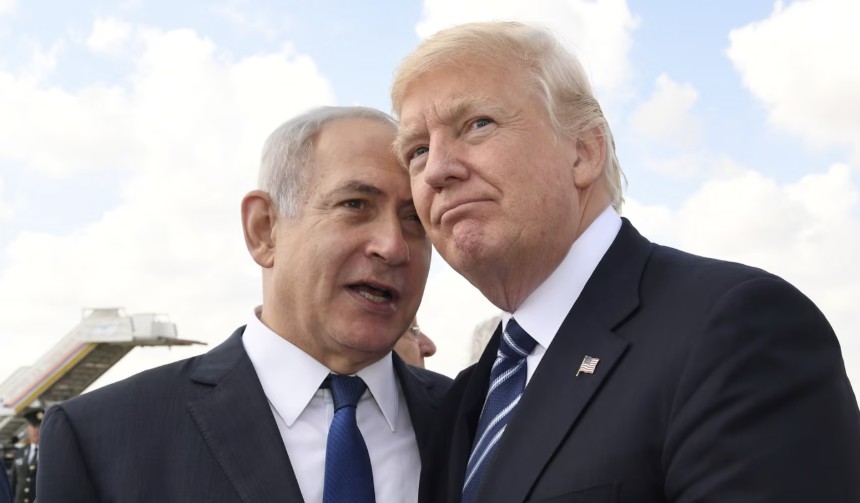
I’ve never understood the anger Tucker Carlson and Candace Owens harbor toward Israel.
If anything, Israel acts more like a younger sibling to America, and the country has finally grown up and learned to carry their own weight. Moreover, Israel is scrappy, smart, and capable of teaching even Big Brother a thing or two.
That dynamic feels familiar: the kind of relationship where protection isn’t just muscle, it’s brains, strategy, and the occasional well-timed jab. And like any younger brother who eventually grows up, Israel doesn’t need constant protection anymore. Today, Israel stands shoulder to shoulder with the U.S., proving that being small doesn’t mean being powerless.
I get it. I was the little brother.
 Big afro, big talk, a penchant for borrowing clothes and returning them funky. For years I looked up to my big brother. He was stronger, faster, and always called “shotgun” before me on road trips.
I learned from him, good and bad. I absorbed some of his mannerisms, but eventually found my footing. I no longer needed to be protected — I eventually wanted to be respected.
And like any good sibling, over time we became equals. We fought less, embarrassed each other more, and learned that sometimes support comes with a side of existential competition.
That’s how I see the United States and the State of Israel.
The U.S. is Big Brother: global heavyweight champion in sheer physical dominance.
Navy fleets, jets, networks, and a GDP that makes other countries’ budgets look like lemonade stands. The U.S. can punch above its weight, heck, it is its own weight class.
But strength isn’t the only currency in the world.
Then there’s Israel: the sharp-tongued little brother who’s been brushing up on chess while everyone else was playing checkers. A small nation with powerful brains in the room. Not to mention the larger Jewish contribution to global innovation at large.
Consider this: Jews — whether in Israel, America, Europe or elsewhere — make up roughly 0.2% of the world’s population yet account for about 22% of Nobel laureates historically. That’s not just smart, that’s scholarly ambush on the playground. And even as a country, Israel has more Nobel Prizes per capita than powerhouses like the U.S., France, or Germany.
Forget brute strength. That’s mental strength. It’s strategic cunning that makes guerrilla philosophers out of grandparents and game-theory wizards out of kids who once played hopscotch. If brains were battleships, the Israelis would be a fleet.
Which brings us back to the conservative critique machine.
People like Carlson and his ilk claim to be distraught over supposed “Israel-first agendas,” “foreign influence,” or some Orwellian alliance pulling U.S. strings. Some even go so far as to suggest that U.S. policy on Iran is being puppeteered.
But here’s the thing about critiques like this: if you strip away the boosterism and the clickbait rhetoric, most fall apart under scrutiny.
Allies exchange advice, they lobby, they interface — that’s diplomacy. That’s not puppet strings, that’s strategy. A country whose citizens represent a disproportionate share of global scientific and intellectual contribution has earned a voice — not in the shadowy cloak of conspiracy but in the light of negotiation tables and tech summits.
Sure, Jews have gravitated toward finance and academia — places where money and ideas squirrel away into tight clusters — but that’s often historical and cultural adaptation rather than some grand unified plot. Centuries of diaspora and discrimination funneled talented minds into areas where intellect literally was survival. And those talents then blossomed into some truly big ideas and big influence.
Jews are human and subject to human frailties like any other group.
So, are Jews greedy? No more than any other group. Are they brilliant? Wait for it…yes, but no more than any other group who applied the same rigor.
Regardless, none of that is evidence of global domination. If anything, it’s proof that if you emphasize learning as a culture, its fruits will show up in labs and Nobel halls.
And for anyone who wants to talk about who’s “running the world,” here’s a thought: if it were truly up to plots and secret meetings, don’t you think someone would have figured out how to get Wi-Fi to work in the backyard on a rainy Thursday?
Look, America can, and often does, punch hard on its own.
And when it does, it brings the muscle. But it also brings partners — and that’s not weakness, that’s strategy. Like any big sibling, you don’t always protect with your fists; sometimes you protect with your brain, your alliances, your alliances’ brains.
So if Israel is the scrappy little brother who graduated magna cum laude from the school of realpolitik, maybe that’s not something to resent. Maybe that’s exactly the kind of backup you want when the world throws curveballs bigger than the ones you threw at your older sibling’s bedroom door.
In the epic sibling saga of nations, may our punches land true, our arguments stay verbal, and may we all eventually agree that sibling rivalry is just another name for cooperation with attitude.